June 30, 2026
Pakistan’s domestic energy landscape has hit a critical flashpoint. As natural gas load-shedding intensifies across urban and rural sectors, consumers are turning to Liquefied Petroleum Gas (LPG) as their primary lifeline. However, an acute regulatory disconnect has transformed this essential fuel into a source of severe economic hardship, exposing a massive divide between official state policy and the realities of the open market.
1. The Disparity: Official Caps vs. Market Realities
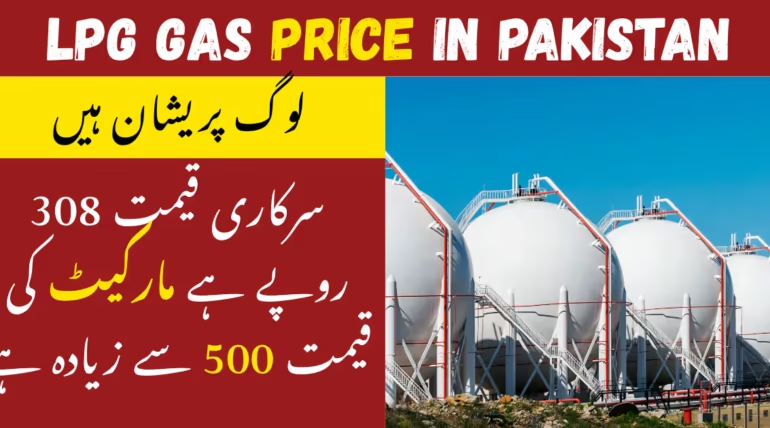
In June 2026, the Oil and Gas Regulatory Authority (OGRA) issued its monthly price notification, establishing the maximum consumer retail price for LPG at Rs. 308.76 to Rs. 309 per kilogram. For low-income households, this federal cap was meant to keep an 11.8 kg domestic cylinder at a subsidized benchmark of roughly Rs. 3,643.
However, investigative journalism across major urban centers reveals that OGRA’s mandated prices exist almost exclusively on paper. In the open markets of Lahore, Karachi, and surrounding districts, illegal profit-taking has pushed actual retail rates to anywhere between Rs. 400 and Rs. 650 per kilogram.
| Pricing Metric | OGRA Official Rate | Actual Open Market Rate |
| Price per Kilogram | ~Rs. 308.76 – Rs. 309 | Rs. 400 – Rs. 650 |
| 11.8 kg Domestic Cylinder | ~Rs. 3,643 | Rs. 4,700 – Rs. 7,600+ |
2. The Mechanics of the “LPG Mafia”
With national consumption exceeding 6 million kilograms daily, the financial impact of this price manipulation is immense. Independent reports indicate that the unregulated retail network—frequently referred to as the “LPG mafia”—has extracted an estimated Rs. 60 to Rs. 70 billion directly from consumer pockets.
This artificial inflation thrives on specific institutional and operational loopholes:
-
The Import Loophole: While OGRA regulates locally produced LPG, imported fuel remains deregulated to incentivize private supply lines. Distributors routinely exploit this policy by blending cheap local gas with volatile, higher-priced imported stock to completely bypass federal price caps.
-
The Enforcement Gap: OGRA operates under a federal mandate but has no localized field force. It relies entirely on provincial administrations and district management to police neighborhood shops. When local teams do take action—such as issuing fines or sealing distribution plants—the financial penalties are treated as minor operational costs, and non-compliant vendors typically resume business the following day.
3. The Socioeconomic Ripple Effect Of High LPG Price
“We cannot leave our children to starve. If the piped gas doesn’t arrive at home, we have no choice but to pay whatever price these shopkeepers demand for a cylinder.”
— A resident speaking to local news in Lahore
The fallout from the LPG crisis extends far beyond the kitchen. Because a large segment of urban public transport—including rickshaws and Chingchi units—relies on LPG, the sudden spike in fuel costs has driven a corresponding surge in transport fares.
Paradoxically, this transportation hike has occurred during a period when standard petrol prices experienced a downward correction. Commuters find themselves paying arbitrary, inflated fares because transport operators are passing their increased LPG expenses down to the public.
4. Looking Forward: The Need for Structural Reform
The current breakdown demonstrates that monthly price notifications are ineffective without local enforcement. For Pakistan to stabilize its secondary fuel sector, experts suggest the state must move beyond symbolic retail raids and address root issues. This includes establishing unified pricing policies for local and imported gas, creating dedicated regulatory monitoring forces, and expanding regional gas storage infrastructure to mitigate sudden supply shocks. Until these structural reforms occur, vulnerable consumers will continue to bear the financial burden of an unpoliced market.
To see how these ongoing shortages affect daily life on the ground, you can view the investigative coverage from Geo News on the LPG Price Hike, which highlights how public frustration is mounting as retail prices continue to diverge from official government notifications.