3. Tariff & Slab Rate
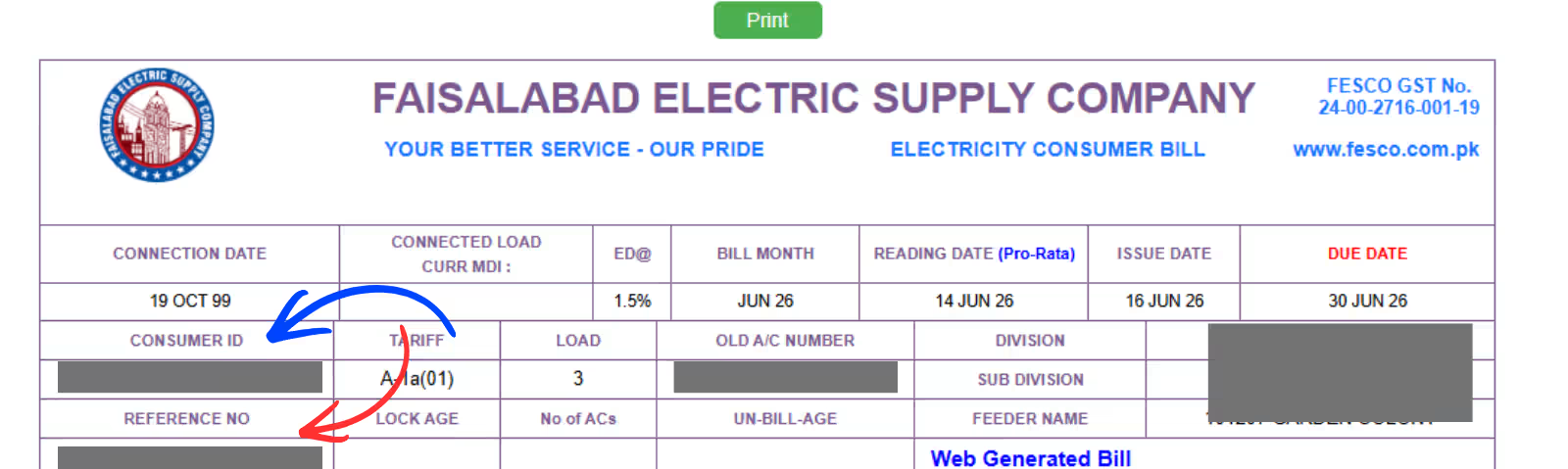
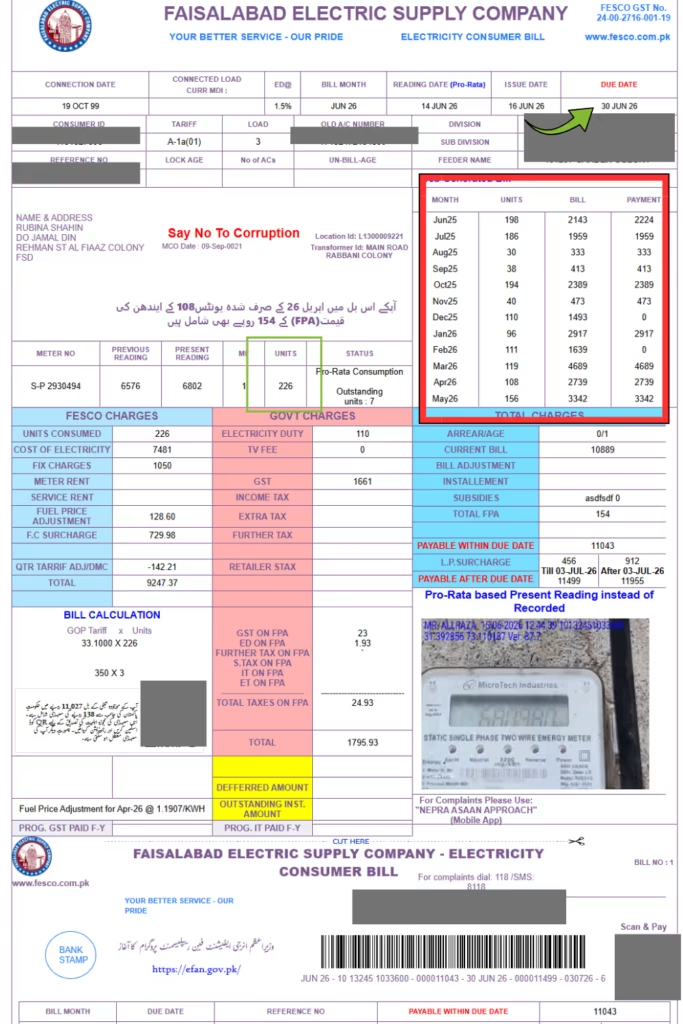
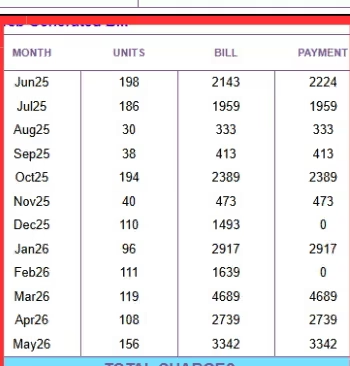
Your tariff category (domestic, commercial, industrial, agricultural, or general supply) determines which NEPRA-notified rate table applies. Within domestic tariffs, the per-unit rate increases in slabs based on total monthly consumption — lower-consumption households (especially “lifeline” consumers using up to 50 units/month) pay heavily subsidized rates, while higher-consumption households pay progressively more per unit. See the full tariff table below.
4. GST (General Sales Tax)
A government sales tax is applied to the electricity charges portion of your bill. The rate is set by federal tax policy (commonly 17% for most non-lifeline consumer categories) and can change with the annual Finance Act — lifeline consumers are typically exempt or pay a reduced rate.
5. FPA (Fuel Price Adjustment) / Fuel Cost Adjustment
FPA (also referred to as Fuel Cost Adjustment, FCA, or Quarterly Tariff Adjustment, QTA, depending on the mechanism) is a variable charge that reflects the actual cost of fuel used to generate electricity in a given month or quarter compared to the cost assumed in the base tariff. It can be a positive charge (you pay extra) or a negative adjustment (you get a discount) — in mid-2026, for example, NEPRA approved a multi-rupee-per-unit reduction for several months as relief to consumers. This is why your per-unit cost can vary noticeably month to month even if your tariff slab hasn’t changed.
6. FC Surcharge (Financing Cost Surcharge)
A fixed surcharge, approved by NEPRA, is meant to cover financing costs related to the power sector’s circular debt. It’s applied per unit and is separate from FPA.
7. Electricity Duty (ED) & TV Fee
- Electricity Duty — a provincial government levy, typically a small percentage of the energy charges.
- TV Fee (PTV Licence Fee) — a flat monthly fee (commonly Rs. 35 for domestic consumers) collected on behalf of Pakistan Television, regardless of whether you own a TV.
8. Arrears & Late Payment Surcharge (LPS)
- Arrears — any unpaid balance carried forward from previous bills.
- Late Payment Surcharge (LPS) — a penalty automatically added if you pay after the due date. This is why FESCO bills show two amounts: the amount payable by the due date and a higher amount payable after the due date.
9. Net Payable & Due Date
The Net Payable Amount is the bottom-line figure — the sum of energy charges, taxes, surcharges, and any arrears, minus any adjustments. The Due Date is the last date to pay the lower amount; missing it triggers the late-payment amount shown alongside it.