
July 4, 2026
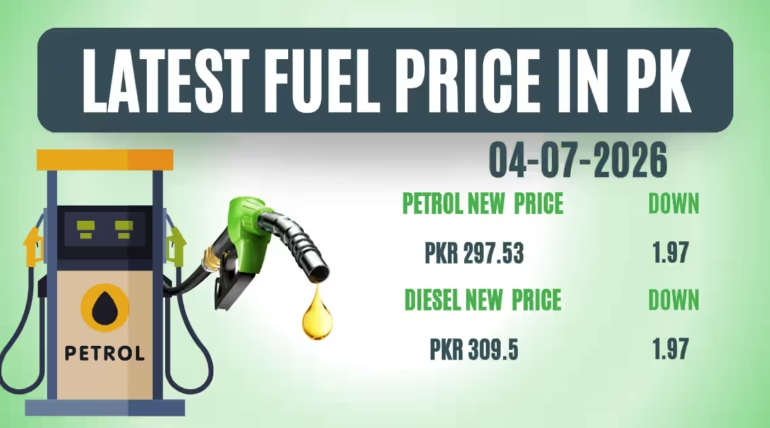
Last night, the government announced a marginal reduction in diesel and petrol prices. Following a decrease of Rs 1.97 per liter, the price of petrol and diesel now stands at Rs 297.53. The price of high-speed diesel has also been reduced by the same amount, bringing it to Rs 309.5 per litre. For the average Pakistani household and the daily commuter, this price cut feels negligible- akin to a mere drop in the ocean—rather than offering any genuine relief. In fact, a close examination of developments in the global oil market over the past two weeks suggests that the reduction should have been at least three times greater.
Let me break it down in the simplest way possible, so every Pakistani can understand what really happened and where their relief money disappeared.
What Happened to Global Oil Prices Vs Petrol Price?
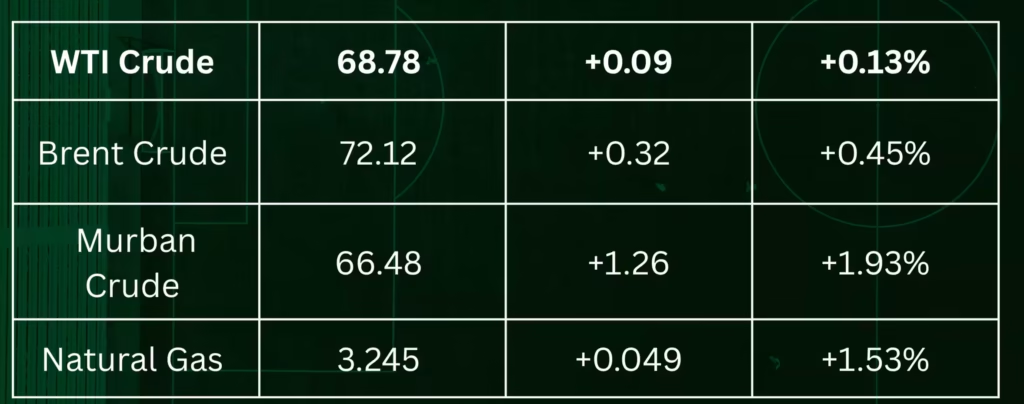
First, the good news. In the global market, the price of crude oil – the raw material from which petrol and diesel are made – fell sharply. Over the last fortnight, the benchmark oil price that matters to Pakistan dropped by about $3.50 per barrel, from $76.50 to $73. That might not sound like much, but when you convert it into rupees and litres, it is a big deal. A $3.50 fall in the oil price means the cost of making petrol and diesel for Pakistan fell significantly.
How Big Should the Price Cut Have Been?
- A simple principle applies here: a one-dollar-per-barrel drop in the international market price of the product should result in a reduction of approximately Rs 1.80 per liter at petrol pumps in Pakistan.
- This calculation factors in the exchange rate (currently around Rs 286 per dollar) and the fact that a barrel contains approximately 159 liters of liquid.
- Therefore, a $3.50 drop in price should have led to a reduction of roughly Rs 6.30 per liter in the prices of petrol and diesel.
- Under a fair and transparent system, this is what should have happened; instead, we saw a price reduction of only Rs 1.97.
- Now, the question on every Pakistani’s mind is: where did the remaining Rs 4.33 per liter go?
- But during the war, crude oil hit 117$ per barrel. After the war, it dropped to $ 70 per barrel, Govt Increase as 100 PKR once but decrease with one rupee
The Hidden Hand: Petroleum Levy
The answer is a single word: tax—specifically, the ‘petroleum levy.’ Unlike GST, the petroleum levy is not based on a fixed percentage rate; rather, it is a set amount per liter that the government can alter at any time, provided it remains within the legally prescribed maximum limit. Over the past two weeks, while global prices were falling, the government quietly raised this levy on both petrol and diesel from Rs 60 per liter to approximately Rs 64.33 per liter. They used the drop in global prices as a pretext to generate additional revenue for themselves.
Imagine a shopkeeper who buys an item from the market at a lower price but, instead of passing the full discount on to you, keeps the lion’s share for himself and offers you only a negligible reduction. This is precisely the situation that has unfolded: the global market provided relief of Rs 6.30 to Pakistani consumers, yet the government retained more than Rs 4 of that amount and passed on a benefit of less than Rs 2 to us.
Why Did the Government Do This?
The answer lies in the difficult economic circumstances facing Pakistan. Our country is currently under an IMF program, which mandates that the government collect a specific minimum amount in petroleum levies to meet budgetary targets. This year, the government plans to generate a record Rs 1.2 trillion from this levy alone. Since sufficient revenue is not being generated through other taxes, the petroleum levy has become an easy source of income. It is easy to collect and difficult to evade; furthermore, when the levy is quietly increased during periods of falling prices, the public barely notices the change.
From the Ministry of Finance’s perspective, this makes sense; they require funds to service debts, run the government, and avert a default. However, from the common man’s perspective, it is sheer injustice. When global prices rise, we have to pay more, yet when global prices fall, we do not receive full relief because the government increases its levies (taxes/duties). Consequently, we end up bearing the burden in either scenario.
The Real Impact on Middle-Class Life
A relief of Rs 1.97 means a motorcyclist saves less than Rs 10 when filling a five-litre tank. A diesel-powered rickshaw driver saves approximately Rs 20 on a full day’s fuel. This does not lower transport costs, vegetable prices, or school van fees. Inflation remains high because the largest cost component—fuel—stays artificially expensive due to high taxes. The State Bank is struggling to lower interest rates because fuel-driven inflation refuses to subside. In fact, the government’s decision to maintain the levy undermines the very economic growth it is trying to revive.
Had the full price reduction of Rs 6.30 been passed on to the public, a family owning a small car could have saved over Rs 250 on a single tank refill. That amount could have been used to purchase milk, bread, or school supplies. It would have brought genuine smiles to people’s faces and somewhat eased the burden of running a household. Instead, this money will end up in the government exchequer, and the general public will derive no tangible benefit from it.
What Happens Next?
The global oil market appears weak, and prices could see further declines in the coming weeks. If the price of Brent crude drops below $70 per barrel, the next fortnightly price review might necessitate a significant further reduction—possibly by 8 to 10 rupees per liter. It remains to be seen whether the government will pass the full benefit of this reduction on to the public or quietly raise the levy (tax) again. Given past behaviour and the pressure to meet fiscal targets, I expect the levy to be increased once more, thereby negating a substantial portion of the relief intended for the public.
A Final Thought
Pakistanis are resilient, but they are also tired. Every time they see global headlines about falling oil prices, they get hope. Yet at the pump, the drop is always smaller than expected. The government needs to find a fair balance. I understand the need to raise revenue, but squeezing the middle class every time oil prices fall only deepens public distrust. A more transparent system, where the levy stays fixed and consumers enjoy the full benefit of low oil prices, would be a better path. Until then, the Rs1.97 cut is a reminder that in Pakistan, the real price of petrol is not just about oil – it is about policy choices that often leave the common man short-changed.