
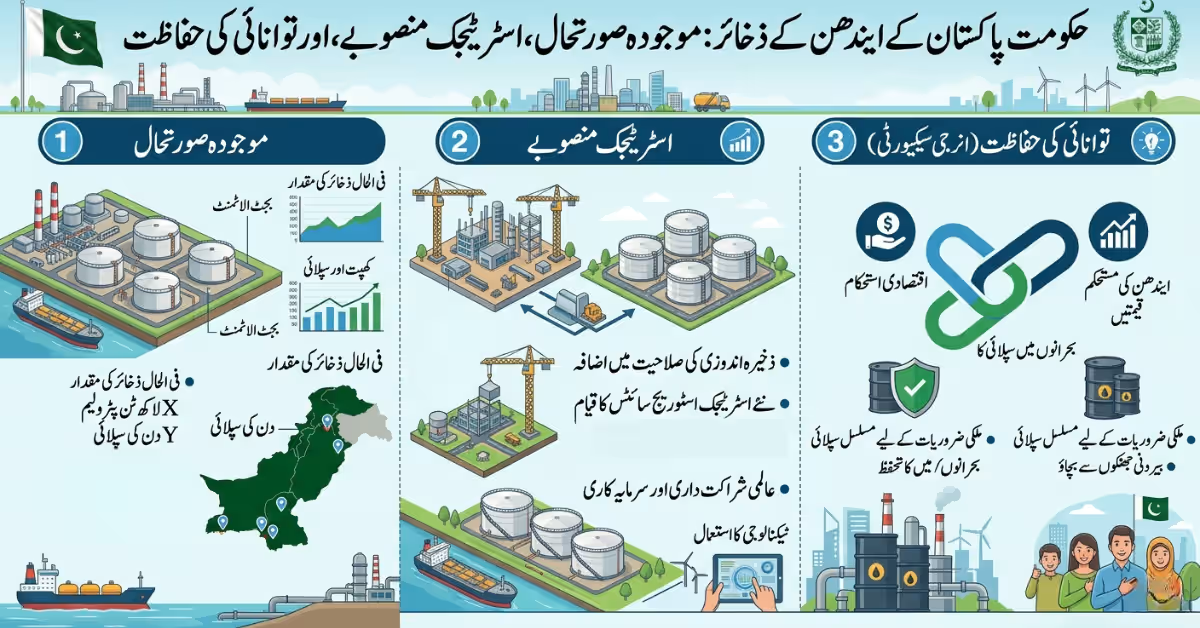
Commercial Reserves – The Only Buffer Pakistan Has
Unlike countries with strategic petroleum reserves (SPRs), Pakistan relies entirely on commercial reserves held by oil marketing companies (OMCs) such as PSO, Shell, and Total Parco.
Current Commercial Reserve Levels (March 2026)
According to official briefings to the Senate Standing Committee on Petroleum:
Fuel Type | Reserve Coverage |
Petrol | 27 days |
High Speed Diesel | 21 days |
Jet Fuel (JP-1) | 14 days |
Crude Oil | 11 days |
Liquefied Natural Gas (LNG) | 9 days |
Sources: Pakistan Today, March 16, 2026
Commercial vs Strategic Reserves – A Critical Distinction
The oil sector has drawn a clear distinction between the two:
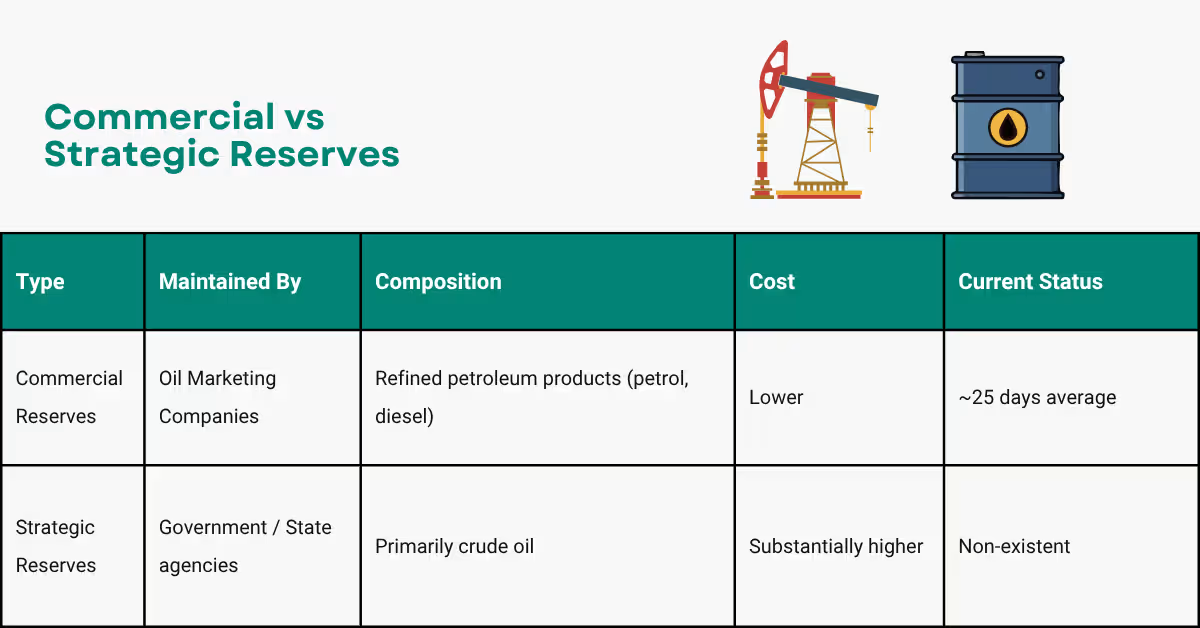
Source: The News, March 4, 2026
“Pakistan currently maintains around 25 days of petroleum product stocks as commercial reserves. Strategic reserves, by contrast, are typically maintained by governments or state agencies, involve substantial costs and primarily consist of crude oil rather than refined petroleum products.”
— Oil sector officials, The News, March 4, 2026
The Strategic Petroleum Reserve – A Long-Overdue Decision
The Legal Mandate (1983)
The Federal War Book 1983, drafted during General Zia-ul-Haq’s era, explicitly mandated that Pakistan maintain strategic oil reserves equal to 45 days of national demand. In 2006, under President Pervez Musharraf, the requirement was further expanded to 60 days.
Despite these clear mandates, these requirements have never been fulfilled.
Government’s In-Principle Decision (March 2026)
The closure of the Strait of Hormuz finally pushed the government to act. On March 30, 2026, the federal government announced an in-principle decision to establish strategic petroleum reserves to deal with a possible energy crisis, directing relevant authorities to prepare a formal framework.
Key outcomes of the cabinet committee meeting under Finance Minister Muhammad Aurangzeb:
- Crude oil reserves available for about 11 days, with additional shipments on the way to meet refinery requirements through April
- Planning for petroleum product imports for April is actively underway, with large supplies already secured under commercial and government agreements
- Efforts to run refineries at full capacity to maximise local production
- Emphasis on prudent procurement decisions to prioritise lower-cost sources while ensuring transparency
Historical Context – Missed Opportunities
The absence of a strategic reserve is not due to a lack of proposals. Over the years, both local and international consultants have conducted studies, prepared detailed reports and outlined roadmaps. However, these recommendations have yet to be implemented, leaving the country’s energy security exposed to external shocks, supply disruptions, and price volatility.
Key observation by oil sector officials: “In an increasingly uncertain global environment, the absence of a strategic oil reserve is not merely an administrative gap but a significant national vulnerability.”
How Pakistan Compares Regionally
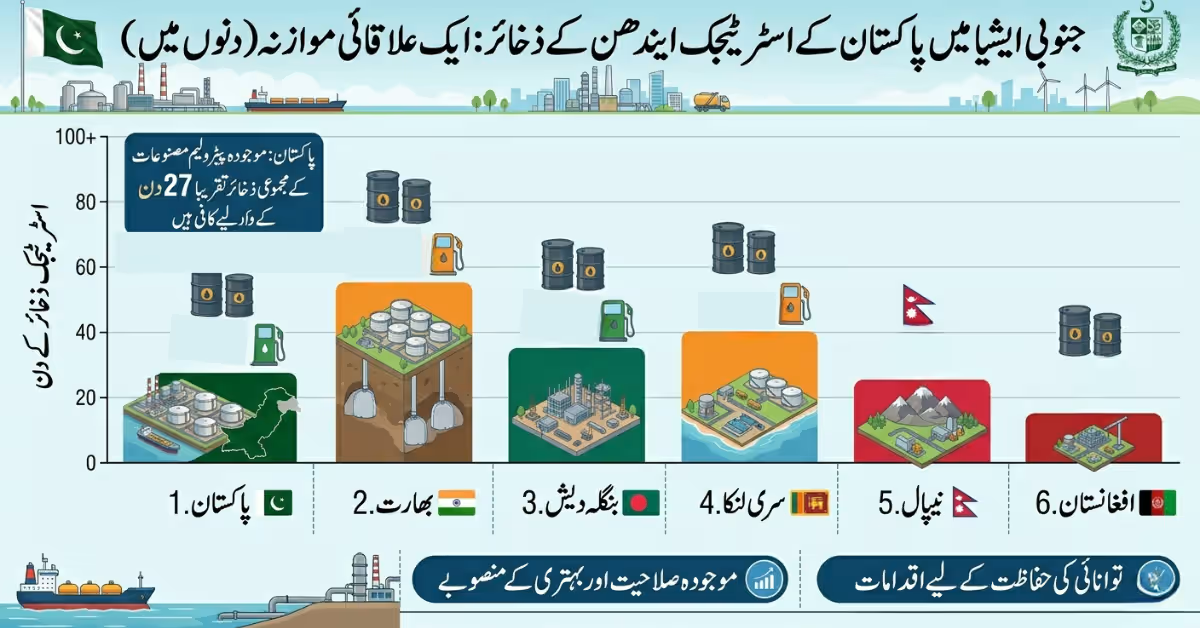
Country | Strategic Reserve Coverage |
India | ~74 days |
China | ~90+ days (classified) |
Japan | ~200+ days |
Pakistan (current) | 0 days (strategic) |
Pakistan (legal mandate) | 45-60 days (unfulfilled) |
Domestic Oil Discoveries – Can Pakistan Reduce Import Dependency?
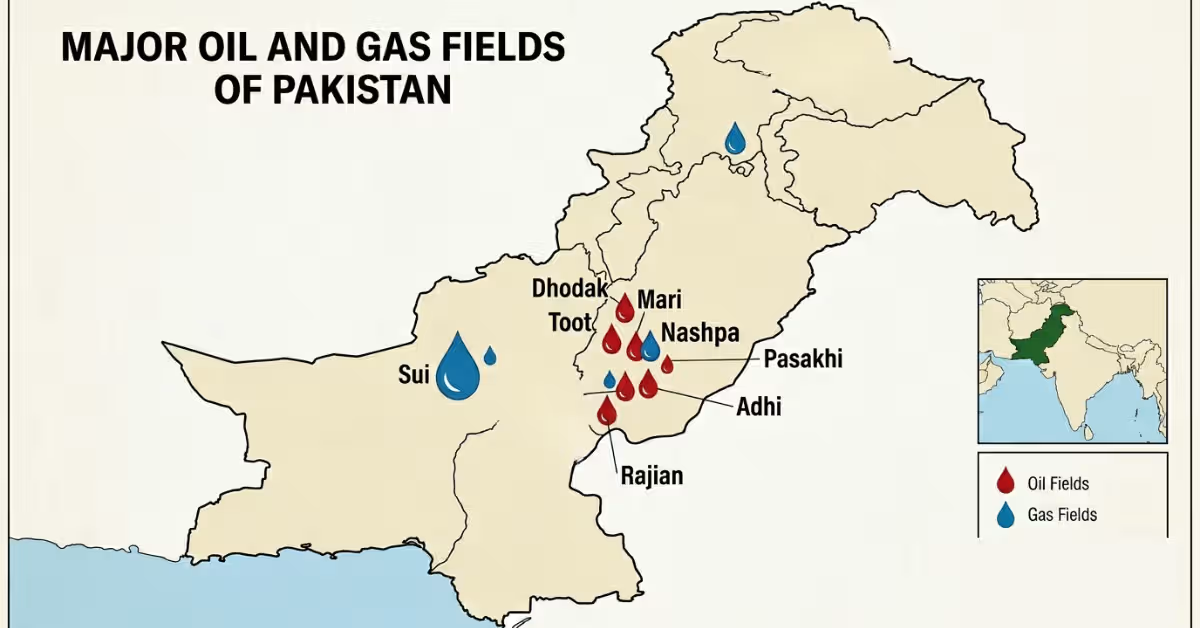
Recent Discoveries (2025-2026)
Pakistan has seen encouraging developments in domestic oil exploration.
January 2026 Discovery:
OGDCL announced a significant oil and gas discovery in its Baragzai X-01 exploratory well in the Nashpa Block of Kohat district, Khyber Pakhtunkhwa. The company will produce about 3,100 barrels of crude oil and 8.15 million cubic feet of natural gas per day. This is the third discovery at this site within a month and will add around 14.5% to the country’s domestic crude output, helping reduce reliance on costly energy imports.
First Half 2025 Growth:
According to data compiled by Intermarket Securities Limited, Pakistan’s overall oil reserves increased 3% to 239.6 million barrels, while gas reserves rose by 5% to 19 trillion cubic feet (tcf). Recoverable oil reserves climbed to 240 million barrels, mainly due to additions from the Shewa and Pindori fields.
2024 Reserve Upgrade
Pakistan recorded its first substantial increase in domestic oil reserves since 2020, with a 23% annual increase to 238 million barrels as of December 2024. Key fields contributing to the increase include Pasakhi/Pasakhi North East, Rajian, Kunar, Sono, Thora, Jhandial, and Lashari Centre.
The Potential – Unconventional Reserves
According to the United States Energy Information Administration (EIA), Pakistan may have over 9 billion barrels of petroleum oil and 105 trillion cubic feet of natural gas (including shale gas) in unconventional reserves. Tapping these resources could transform Pakistan’s energy landscape, but it requires significant investment, technology, and time.
Import Strategy & Supply Chain Security
Traditional Supply Routes – The Strait of Hormuz Dependency
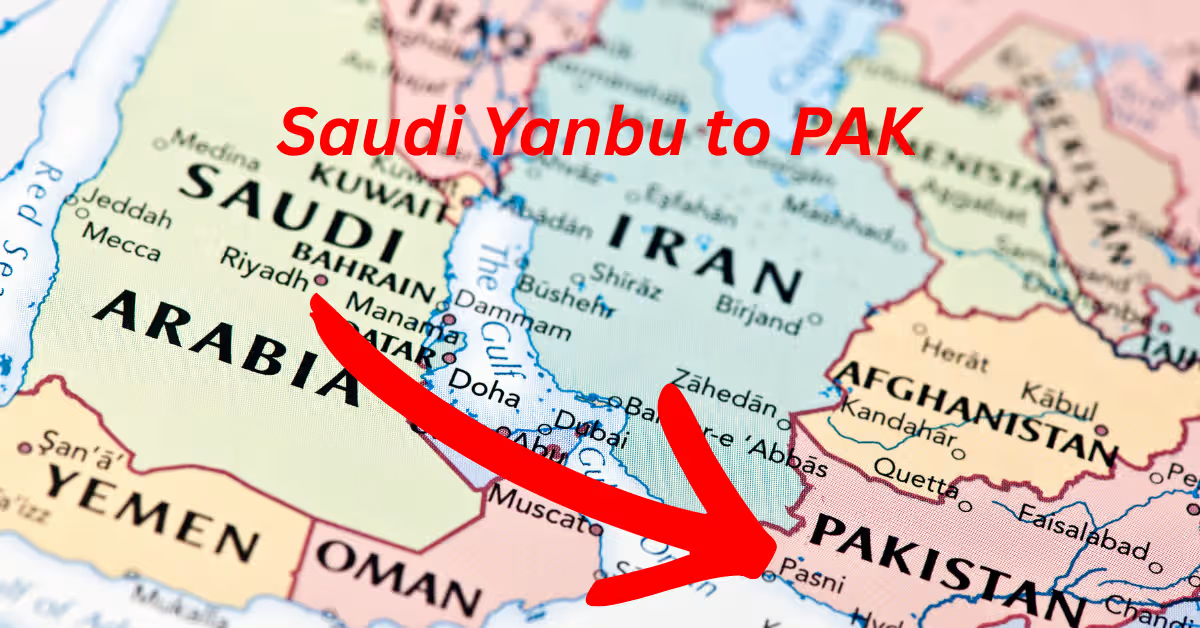
Approximately 70% of Pakistan’s petrol imports originate from the Middle East. Almost all of Pakistan’s crude oil and diesel imports pass through the Strait of Hormuz, making the country highly vulnerable to any blockade or military escalation in the region.
Alternative Sources Developed After the Crisis
Following the Strait of Hormuz closure, Pakistan pivoted to alternative sources:
Source | Status |
Oman | Three petrol cargoes and one diesel shipment were imported in March; two additional petrol shipments are expected |
Fujairah (UAE) | Additional shipments reinforcing domestic reserves |
Yanbu (Saudi Arabia) | Saudi assurance of oil supplies through the Red Sea port (via Pakistan’s diplomatic efforts) |
United States | Pakistan is actively considering its first-ever US crude oil imports to reduce its trade surplus with America |
Supply Assurance for April 2026
As of late March 2026, Pakistan’s fuel reserves exceeded four weeks, with supplies for both March and April fully secured. The Adviser to the Finance Minister, Khurram Shehzad, assured the public that the country’s petroleum reserves are stable and improving, easing concerns about fuel shortages in the coming months.