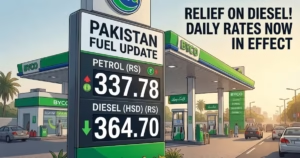
Explore latest data for petrol and diesel price in Pakistan today. As of April 6, 2026, the official rates increase fuel prices are now revised weekly due to global market volatility. I provide verified, up‑to‑date rates, a full tax breakdown, government relief schemes, and expert analysis, all in one place.

Current Diesel and Petrol Price in Pakistan (April 2026) after RS 184.49 Hike

March, Updated prices as per OGRA notification

Fuel TypeOld PriceNew PriceDifference
Petrol (Super)PKR 458.41PKR 378.4180.0
High Speed DieselPKR 335.86PKR 520.35184.49
Light Speed DieselPKR 159.76PKR 159.760.0
Kerosene OilPKR 176.81PKR 176.810.0

Euro Hi-Octane+

PKR 410.00PKR 589.99+179.99

City-Wise Diesel & Petrol Price in Pakistan

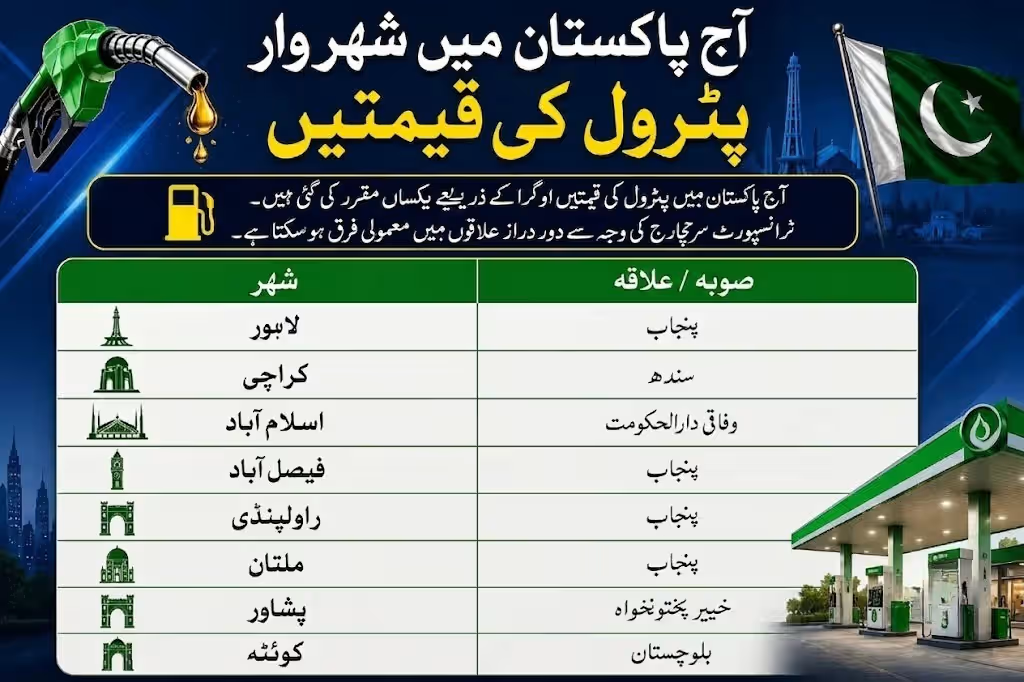
Fuel prices in Pakistan are set by the government every week (or fortnightly in normal times) based on OGRA recommendations. While the base price is uniform across the country, small variations occur due to freight charges, dealer margins, and local taxes. The table below lists the latest ex‑depot and pump prices for petrol and high‑speed diesel (HSD) in key cities.
City
Petrol
Diesel
1Karachi321.17335.86
2Lahore321.17 – 321.50335.86 – 336.20
3Islamabad321.17 – 321.50335.86 – 336.20
4Rawalpindi321.50 – 322.00336.00 – 336.50
5Faisalabad321.20 – 321.70335.90 – 336.30
6Multan321.30 – 321.80336.00 – 336.40
7Peshawar322.00 – 322.50336.50 – 337.00
8Quetta326.00 – 328.00340.00 – 342.00
9Gilgit330.00 – 332.00

344.00 – 346.00

Prices reflect ex-depot rates plus dealer margins. Actual pump prices may vary by station

Why Have Fuel Prices Changed So Dramatically?
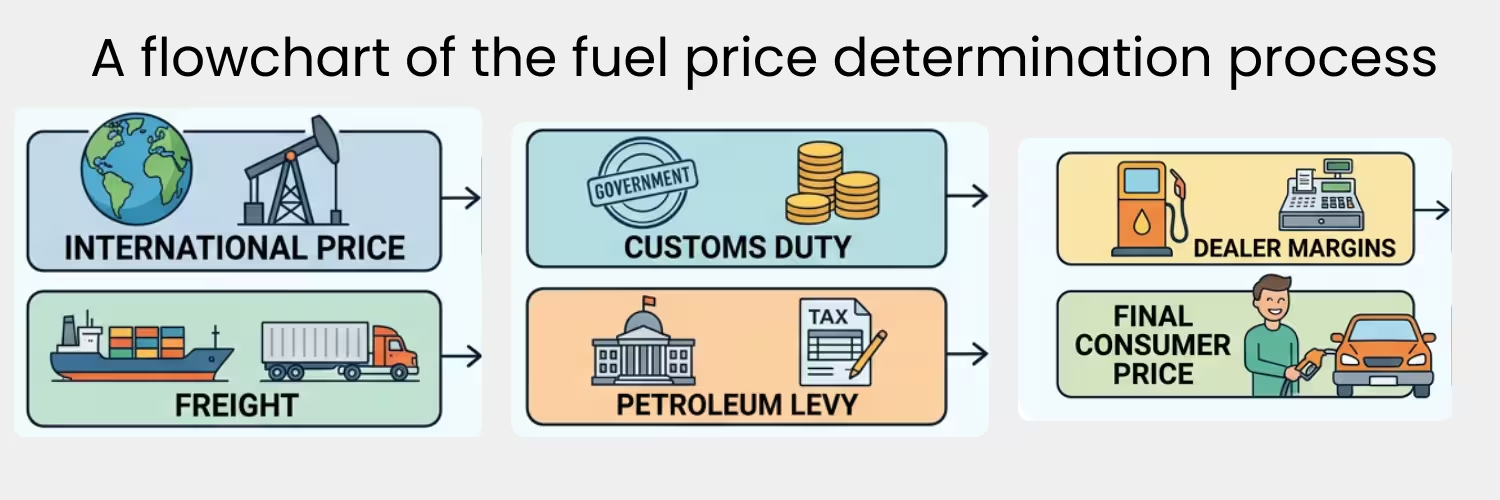
A flowchart or diagram illustrating the fuel price determination process: International Price → Freight → Customs Duty → Petroleum Levy → Dealer Margins → Final Consumer Price.

Several factors have contributed to the recent volatility in Pakistan’s fuel market.

1 Global Oil Price Surge & Iran War

The ongoingUS-Israel-Iran conflicthas severely disrupted oil supplies through theStrait of Hormuz, through which approximately 20% of global oil passes. This has pushed international crude and refined product prices to record levels. The government, facing immense fiscal pressure, initially passed these costs to consumers, resulting in the April 3 hike.

2 Government Levy & Subsidy Strategy

The government uses the petroleum levy as a key fiscal tool. On April 3, the levy on petrol was increased to a record Rs 160.61 per litre, while the levy on diesel was abolished (reduced to zero) to protect the transport and agriculture sectors. Following public outcry, Prime Minister Shehbaz Sharif cut the petrol levy by Rs80 per litre, bringing the price down to Rs378.

3 Shift from Fortnightly to Weekly Reviews

Prior to the Iran war, fuel prices were revised every two weeks. However, the extreme volatility in global markets prompted the government to switch to a weekly review mechanism in March 2026, allowing faster adjustments to align domestic prices with international trends.
Complete Breakdown – Where Your Money Goes
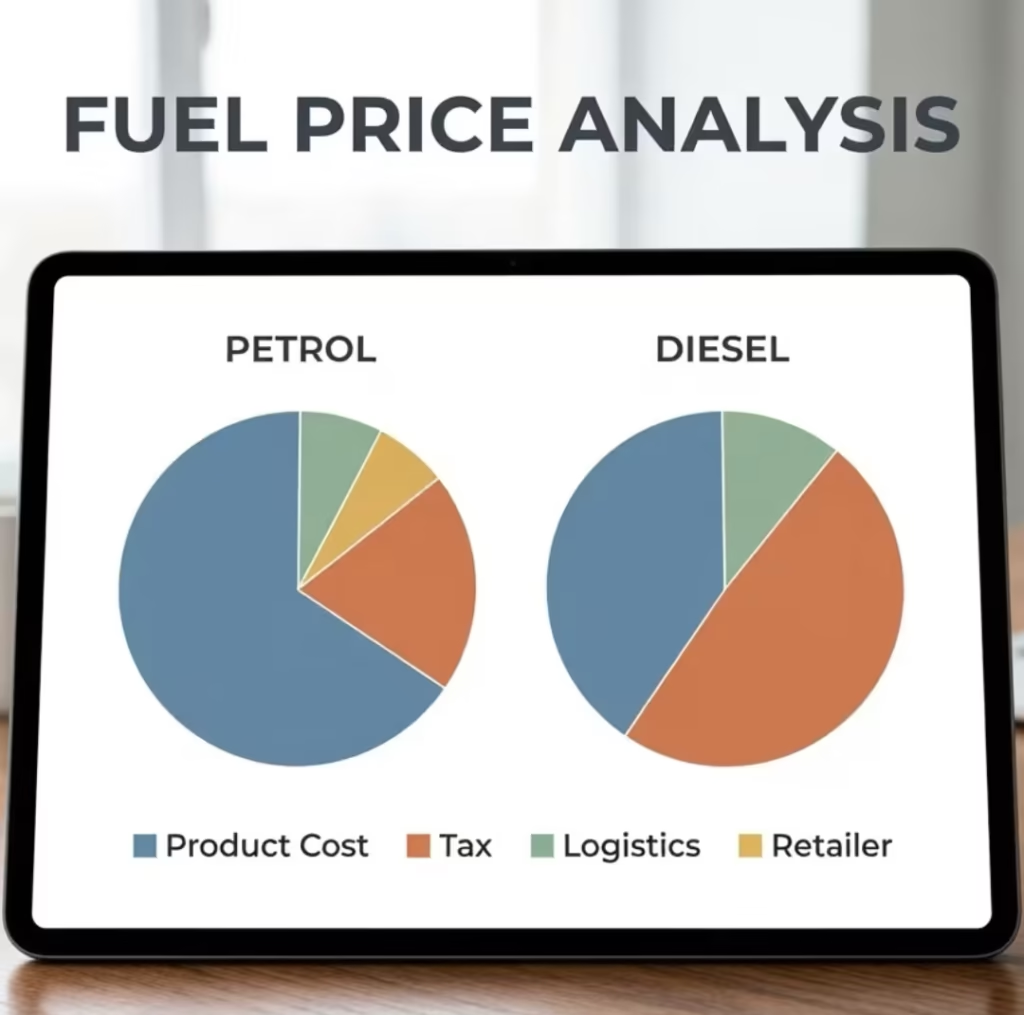
Two graphs are showing breakdown of petrol and diesel price

Have you ever wondered what makes up the price you pay at the pump? Today, I’m here to breakdown based on official government data.

Petrol Price Breakdown (Rs 378 per litre – April 2026)

According to official documents released by the Energy Ministry, here’s how each litre of petrol is priced:

ComponentAmount (Rs/L)Percentage
Ex-Refinery Price~247.15~65.4%
Petroleum Levy~80.61~21.3%
Customs Duty~17.00~4.5%
OMC & Dealer Margins~33.24~8.8%
Total Price378.00100%

Source: Energy Ministry documents, April 2026

Diesel Price Breakdown (Rs 520.35 per litre – April 2026)

ComponentAmount (Rs/L)Percentage
Ex-Refinery Price~461.23~88.6%
Petroleum Levy0.00 (abolished)0%
Customs Duty~17.00~3.3%
OMC & Dealer Margins~42.12~8.1%
Total Price520.35100%

Source: Energy Ministry documents, April 2026

Key Insight:Approximately46% of the petrol price consists of taxes and government levies, while diesel consumers pay almost no levy, a strategic move to keep transport and agriculture costs under control.

Government Relief Measures for Consumers

Recognizing the burden of high fuel prices, both federal and provincial governments have announced targeted relief packages.
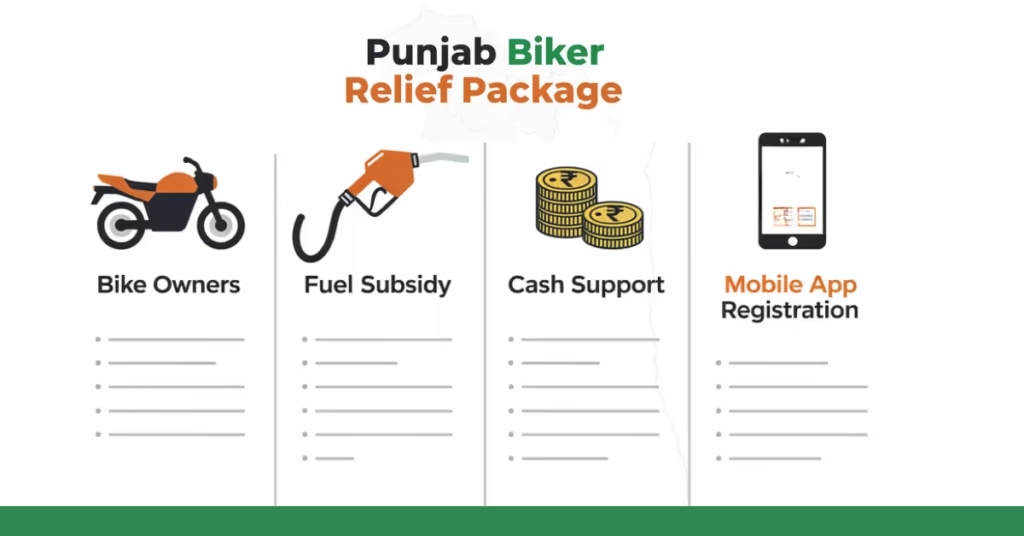
An infographic summarizing the Punjab biker relief package with icons (bike, fuel nozzle, rupees, mobile app).

Punjab’s Fuel Relief for Registered Bikers (Effective April 4, 2026)

Punjab Chief Minister Maryam Nawaz announced a comprehensive relief package for registered motorbike owners, effective fromApril 4, 2026.

BenefitDetails
Fuel SubsidyRs 100 per litre on up to 20 litres of petrol per month (monthly saving of Rs 2,000)
Registration FeeCompletely abolished
Transfer FeeWaived entirely
How to ApplyHelpline 1000, ‘Maryam Ko Batayn’ mobile app, or online portalmkb.punjab.gov.pk

Other Provincial & Federal Relief Measures

  • Balochistan:Launched a helpline to ensure fair pricing and curb profiteering

  • Farmers:Rs 1,500 per acre diesel subsidy for small farmers

  • Public Transport:Fuel subsidies for inter-city buses and freight vehicles

Fuel Price History – How We Got Here

Now I want to Understand you recent trends helps put current prices in perspective.

PeriodPetrol Price (Rs/L)Diesel Price (Rs/L)Key Event
January 2026~253~265Pre-crisis stability
March 7, 2026321.17335.86Rs55 hike due to Iran war
April 3, 2026458.41520.35Record high after levy increase
April 4, 2026378.00520.35Levy cut after public backlash

Sources: OGRA notifications, Ministry of Energy press releases, The News, Daily Times

A clear understanding of the different petroleum products is the first step to making informed and cost-effective choices. The table below lists the key fuel types available in Pakistan, along with their primary uses and current prices.

A Quick Guide to Understanding the Differences

To help you make the right choice, here’s a more detailed look at each fuel type.

Petrol (MS 92)

  • Definition:A light, volatile fuel produced from crude oil, suitable for spark-ignition engines.

  • Specification:This standard petrol in Pakistan typically has an octane rating of around 89-92 RON (Research Octane Number).

  • Applications:It is used in most passenger cars, all motorcycles, auto-rickshaws, and other light vehicles on the road.

High-Speed Diesel (HSD)

  • Definition:A high-energy fuel for engines requiring a higher flash point (ignition temperature). The standard is 54°C for local production.

  • Applications:Powers the heavy transport sector (trucks, buses), agricultural machinery (tractors, tube-wells), and industrial equipment. It’s also the fuel for Pakistan’s railway network.

Kerosene Oil

  • Definition:A combustible liquid distilled from petroleum, less volatile than petrol but more than diesel.

  • Applications:Its high heat output makes it a primary energy source for cooking and heating in rural or off-grid areas. It’s also used for lighting in some remote areas.

Light Diesel Oil (LDO)

  • Definition:A medium-grade fuel heavier than kerosene but lighter than high-speed diesel. It has a high sulfur content of up to 1.8%.

  • Applications:Used in certain industrial settings, like asphalt plants, and in some older or low- to medium-speed diesel engines for small-scale power generation.

High-Octane Petrol (HOBC / RON 97)

  • Definition:HOBC stands for High-Octane Blending Component, a premium fuel for high-performance engines.

  • Specification:With an octane rating of 97 RON, it resists ‘knocking’ (pre-ignition) better than standard fuel.

  • Applications:It is specifically designed for luxury cars and high-compression engines. The government has banned its use in official vehicles to conserve foreign exchange.

  • Price:HOBC isunregulated. Its price is set by individual marketing companies like PSO and Shell, which is why you see a range.

Understanding what each fuel is used for can help you see why price changes affect different parts of the economy. Does a comparison of how these fuels are taxed, or an update on the latest government relief packages, interest you?

Fuel TypePrimary Uses
Petrol (MS 92)Private transport: cars, motorcycles, rickshaws, small vehicles
High-Speed Diesel (HSD)Heavy transport: trucks, buses, trains; agriculture: tractors, tube-wells; industrial machinery
Kerosene OilRural & off-grid cooking, heating, and lighting
Light Diesel Oil (LDO)Low- to medium-speed industrial machinery, small power generation units, some older engines

High-Octane Petrol (HOBC / RON 97)

Premium/luxury performance vehicles, high-compression engines

LPG Gas

Gas use for cooking at home and Factories

Conclusion

Pakistan’s fuel market remains highly volatile due to the ongoing Middle East conflict and global oil price pressures. While petrol prices have been stabilized at Rs 378 per litre through government intervention, diesel remains at a record Rs 520.35 per litre. Targeted relief measures, including Punjab’s biker subsidy and farmer support, aim to cushion the impact on the most vulnerable.

Your Action Plan:

  1. Stay updated aboutPetrol Price Pakistan

  2. Apply for reliefif you’re a registered biker in Punjab (Helpline 1000)

  3. Adopt fuel-saving habitsto stretch every litre

  4. Stay informed– prices are now reviewed weekly, so check back every Friday for updates

Understanding what you pay and why helps you make informed decisions. Bookmark this page for real-time updates and share it with others who need reliable fuel price information.

Frequently Asked Questions

As of April 6, 2026, petrol is priced atRs 378 per litrefollowing a Rs80 reduction in petroleum levy announced on April 4

High Speed Diesel (HSD) remains atRs 520.35 per litre, unchanged since the April 3 hike.

Diesel’s ex-refinery price is significantly higher due to international market dynamics. However, the government has abolished the petroleum levy on diesel to prevent further increases

Following the Iran war, the government shifted from fortnightly toweekly price reviewsto respond faster to global market volatility

The Oil and Gas Regulatory Authority (OGRA) calculates recommended prices based on international benchmarks and exchange rates. The federal government then approves final prices, often adjusting levies to manage public impact.

Approximately 46% of the petrol price (about Rs 174 per litre) consists of taxes, including petroleum levy, customs duty, and dealer margins

The government has frozen the current petrol price for one month. Future changes depend on global oil prices, the rupee-dollar exchange rate, and government levy decisions.

High-octane petrol (HOBC) is not regulated by OGRA. Its price is set by oil marketing companies and currently ranges between Rs 410 and Rs 535 per litre.

Yes. The Punjab government offers aRs 100 per litre subsidyon up to 20 litres of petrol monthly for registered bikers, along with waived registration and transfer fees. Apply via helpline 1000 or the ‘Maryam Ko Batayn’ app